The $39 Belt Clip That's Quietly Replacing $400 Cooling Vests On Construction Sites Across Texas, Arizona, And Florida
OSHA's proposed federal heat protection standard is still working its way through rulemaking. Smart foremen aren't waiting. Here's what's actually working on job sites right now.
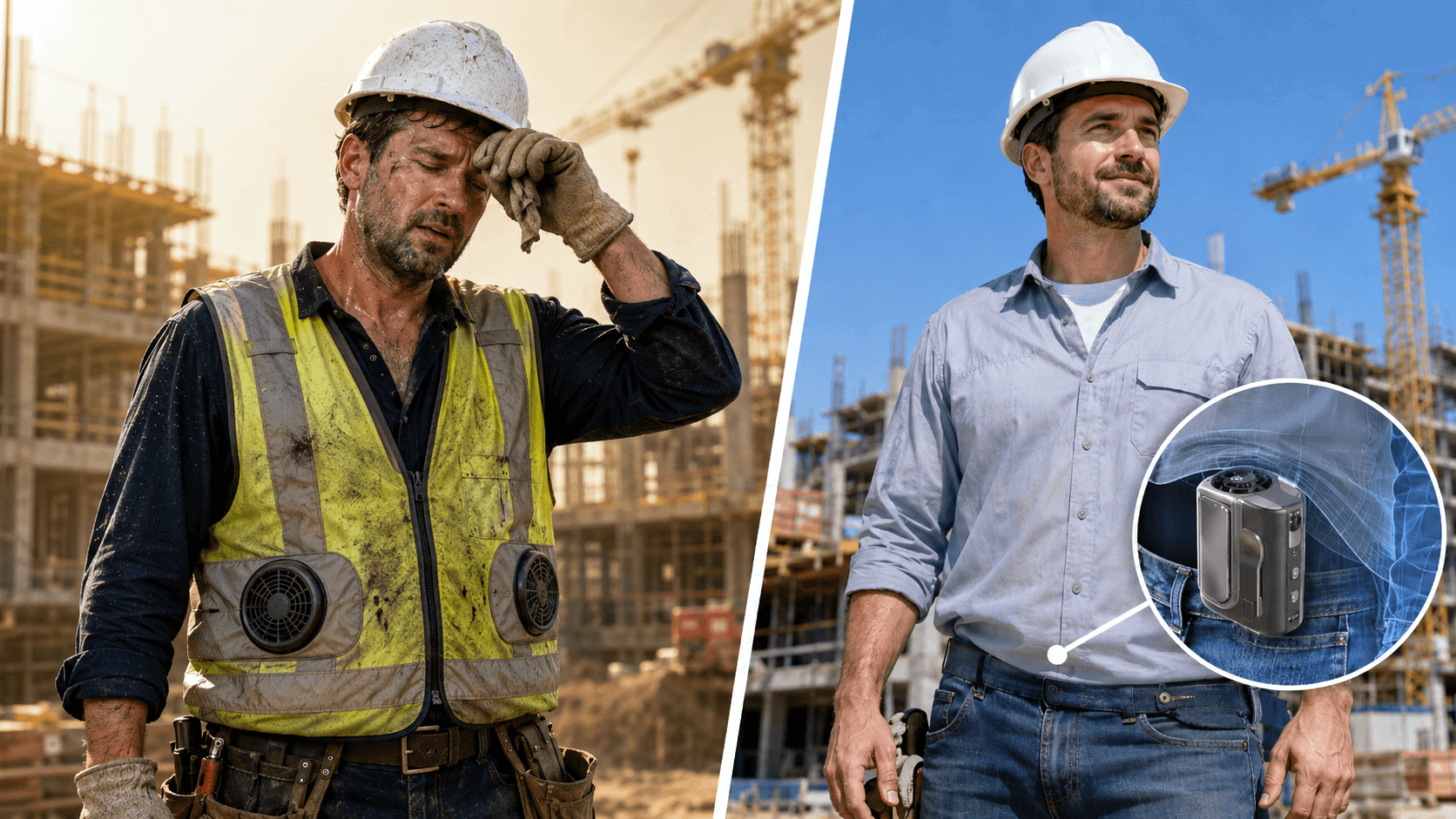
Last August in Houston, a 47-year-old roofer named Mike Delgado nearly died on the job.
It was 104°F on the ground. On the black asphalt shingles where he was working, his thermometer read 152°F. He'd been drinking water all morning. He'd taken his shade breaks. He did everything right.
"I just remember feeling like the world was tilting," he told me. "My buddy caught me before I went off the edge. Ambulance came. Three liters of IV fluid. They told me I was 20 minutes from a heart attack."
Mike was lucky. According to the U.S. Bureau of Labor Statistics, 48 American workers died from environmental heat exposure in 2024 alone, with an annual average of 40+ in recent years. BLS data also shows an average of 3,389 heat-related work injuries and illnesses requiring days away from work each year (2011–2020). OSHA explicitly states these figures "are likely vast underestimates" due to systemic underreporting.
In August 2024, OSHA published its Notice of Proposed Rulemaking for the first federal heat injury and illness prevention standard in U.S. history — covering an estimated 36 million U.S. workers. The rule remains in proposed status. While employers wait, OSHA's renewed Heat National Emphasis Program (April 2026) is actively conducting inspections.
Most contractors have been quietly evaluating what compliance is going to cost. Industrial-grade cooling vests run $150 to $500+. Phase-change vests need swap-outs. Air-conditioned vests need power.
Then a small device started showing up on job sites.
"My crew won't go back to working without them. I bought 12 last year. I'm buying 30 more this year."

What The Crews Are Actually Using
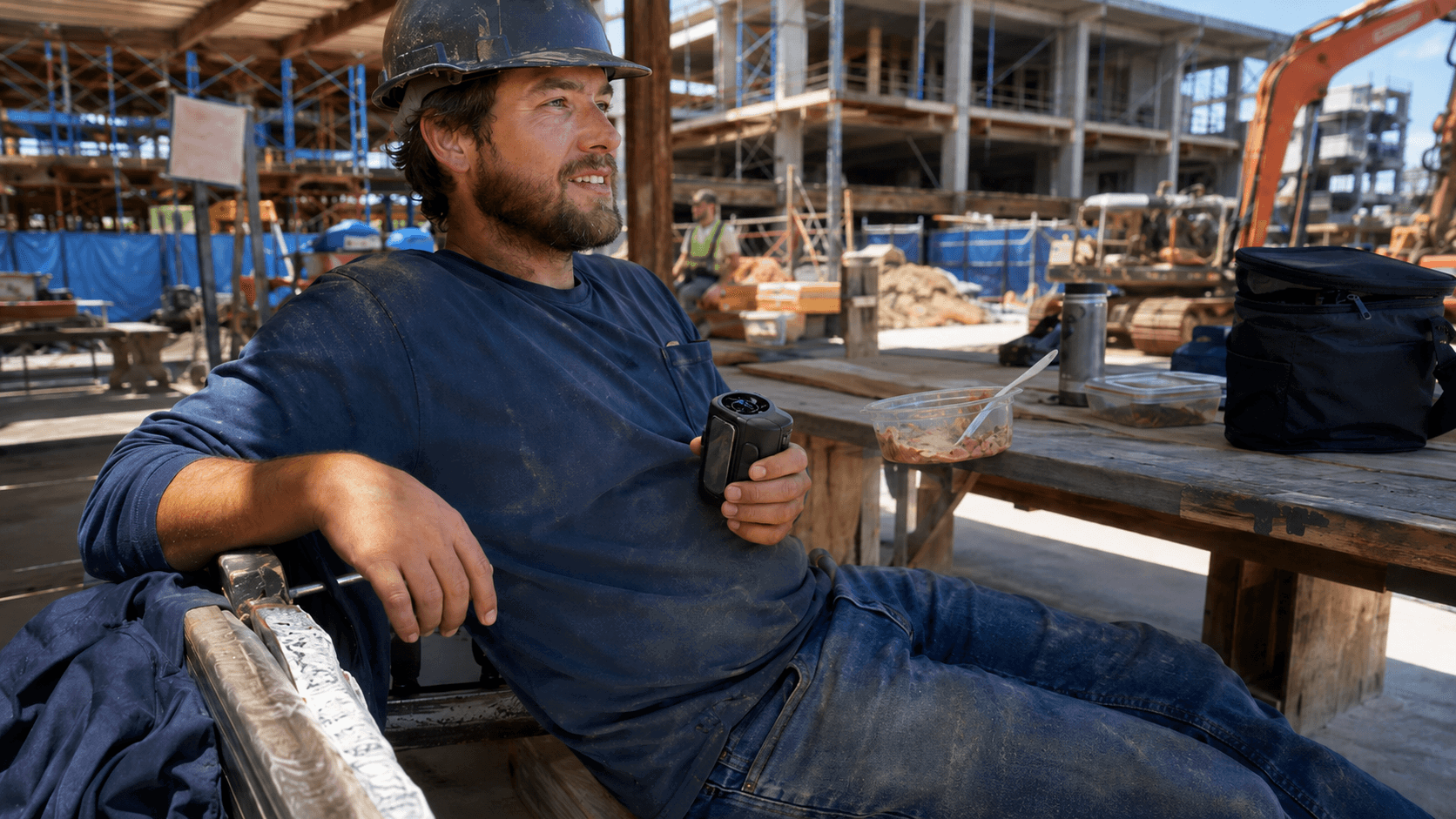
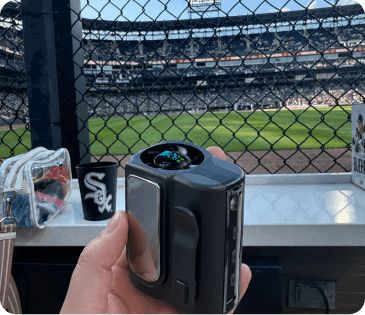
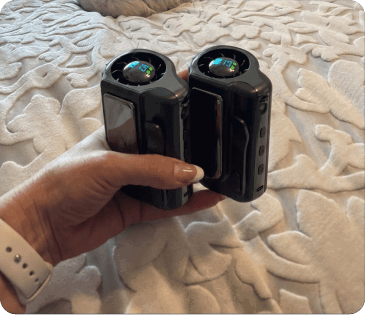
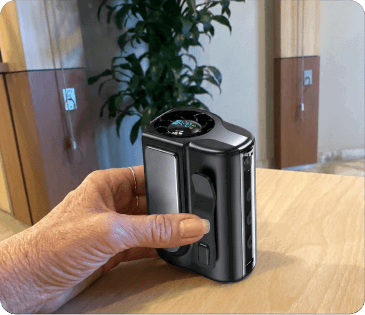
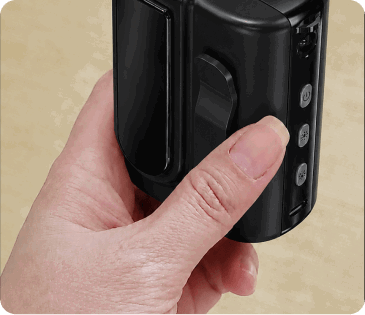
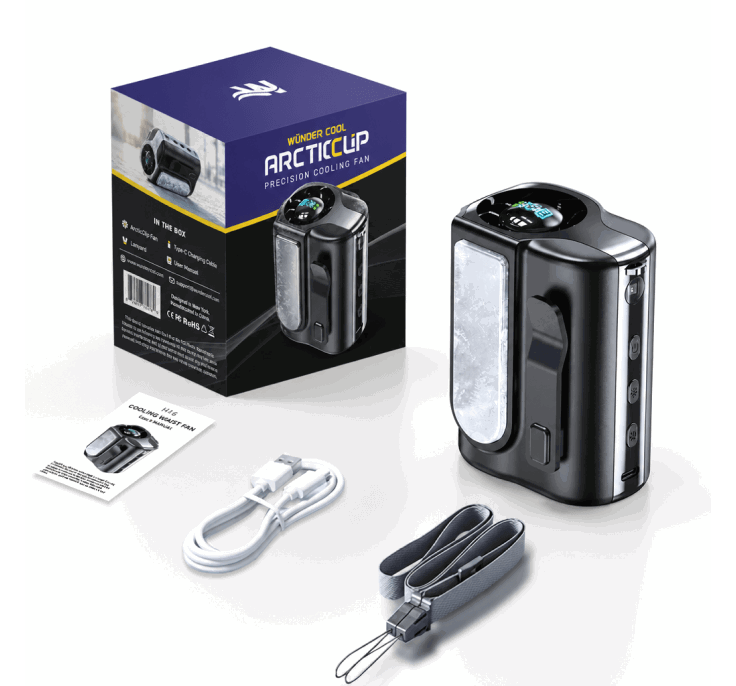
The device is called the Arctic Clip. It's about the size of a pack of cigarettes. It clips to your belt — or, with the reverse clip, to the inside of your shirt collar.
Two things are happening inside it:

A powerful little fan pushes a strong column of air up under your shirt. This accelerates evaporative cooling — the body's primary heat-dumping mechanism. Research published in the Journal of Applied Physiology has shown that increased air velocity meaningfully raises sweat evaporation efficiency and reduces heat strain.
A cold metal plate (a cooling method in use since 1834) holds a cold-to-the-touch surface against the skin.
A 2024 systematic review published in PMC found that personal cooling garments using conductive cooling reduced core body temperature by approximately 0.3°C and heart rate by 12 bpm during heat stress. Neck and torso cooling during exercise in heat has been shown to extend tolerance time and reduce perceived thermal strain.
Why Belts Beat Vests And Neck Fans
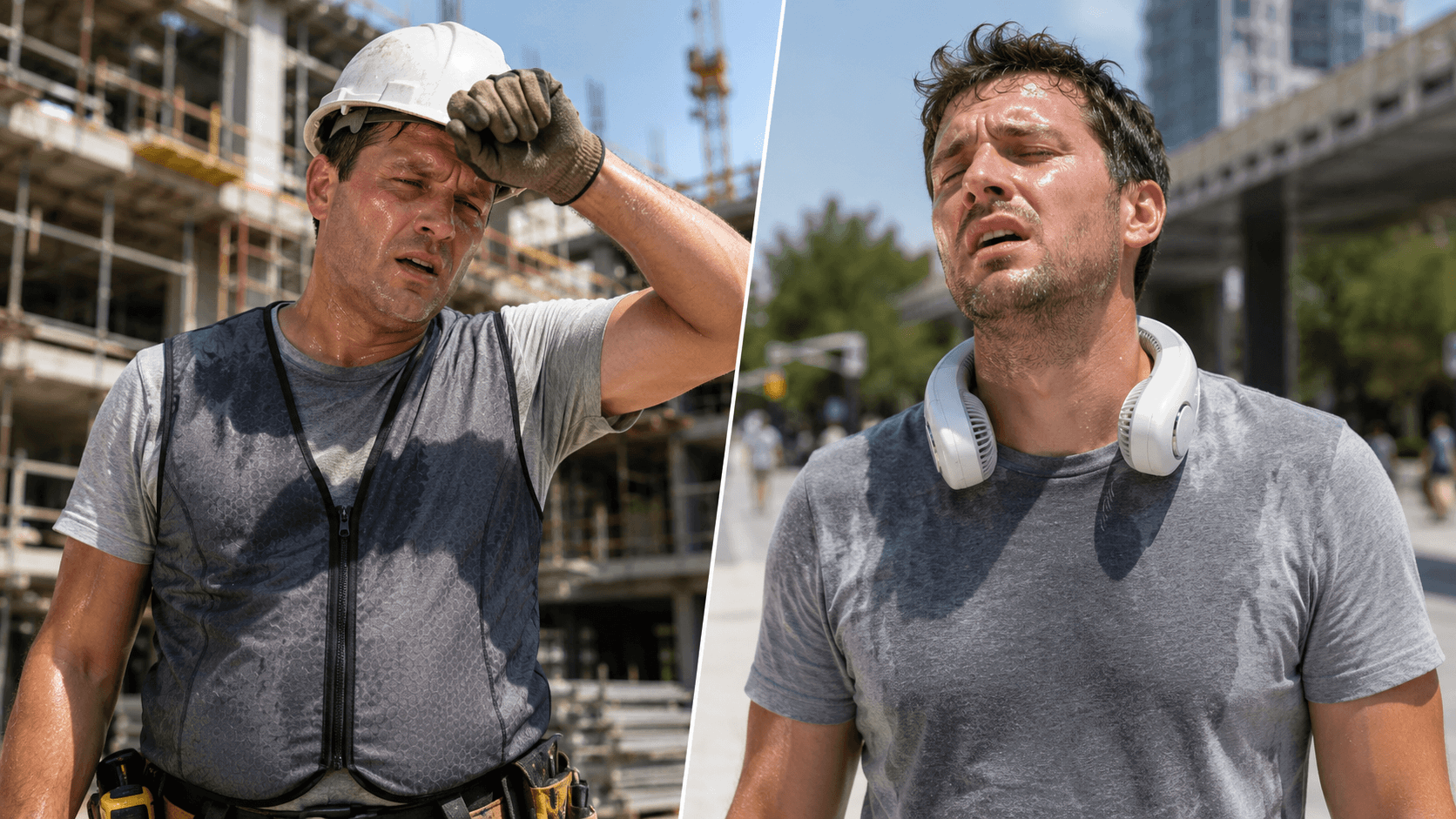
Cooling vests have two problems nobody on a real job site talks about until they've tried one: they're heavy (3 to 6 pounds when fully charged with ice packs), and they trap heat against your back.
Neck fans have two problems too: they get in the way of hard hats and ear protection, and they push dry air at your eyes.
The Arctic Clip sits on a belt — exactly where every construction worker, landscaper, roofer, and warehouse picker already has a belt. It doesn't interfere with PPE. It doesn't add meaningful weight. It blows cooling air up the inside of your shirt for 8+ hours.
8+ hours of runtime. One full shift. No ice pack swap-outs.
What A Real Day Looks Like With It
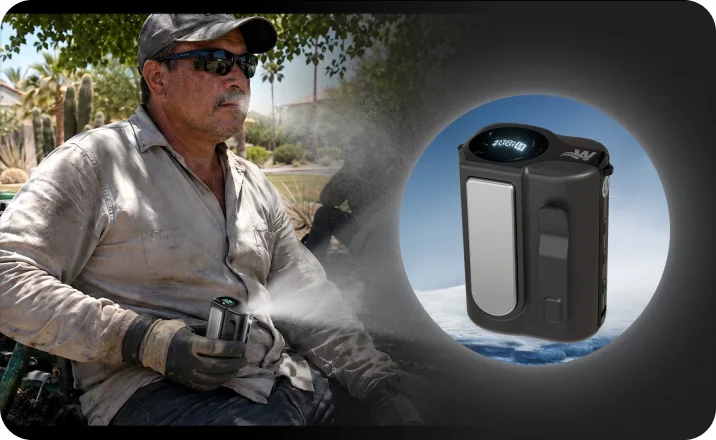
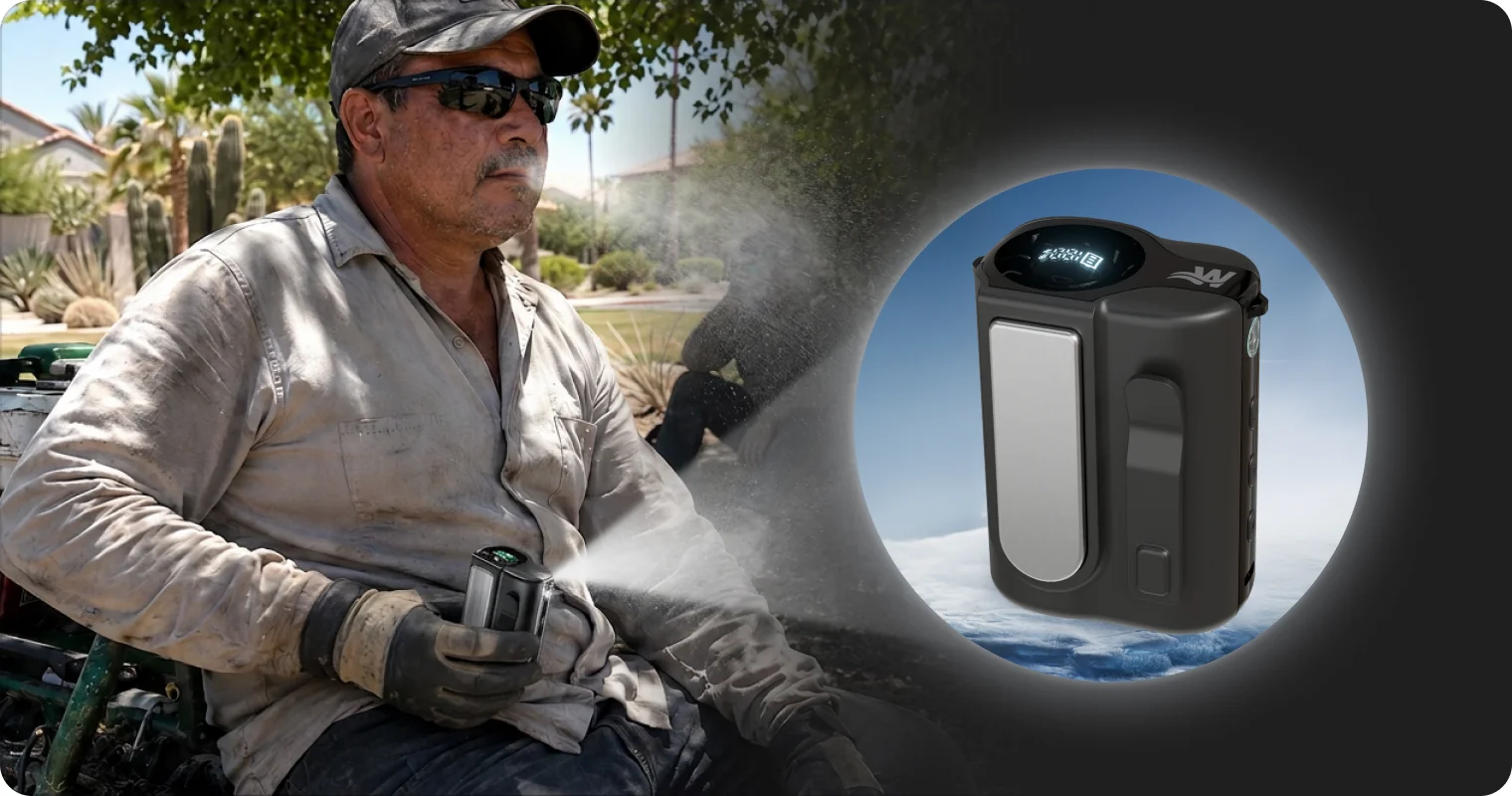
I spent a day with a landscaping crew in Mesa, Arizona, in early May. The high was 101°F.
Carlos, the crew lead, has 17 years on him. He's seen it all. When his foreman handed out Arctic Clips at the start of the day, he was openly skeptical.
"I figured it was another gimmick," Carlos told me at lunch, after running an aerator for four hours under direct sun. "But you turn it on, and within a minute it feels like somebody opened a freezer in your shirt. I'm not even sweating through my undershirt right now."
The other thing he noticed: he wasn't tired the way he usually is by noon.
The science backs Carlos up. A Lancet Planetary Health systematic review (Flouris et al., 2018) found that 30% of workers exposed to heat stress report productivity losses, and 35% experience occupational heat strain. Heat tax on labor output is real and measurable.

The Specs Foremen Care About

7000mAh battery. 8+ hour runtime on medium.
USB-C fast charge. Full recharge in approximately 90 minutes
Three fan speeds, two cooling levels.
Reverse clip design — works on a tool belt OR on the inside of a shirt collar.
CE, FCC, and RoHS certified.
Lightweight construction — typically forgotten on the body inside 5 minutes.
The Math For A Crew
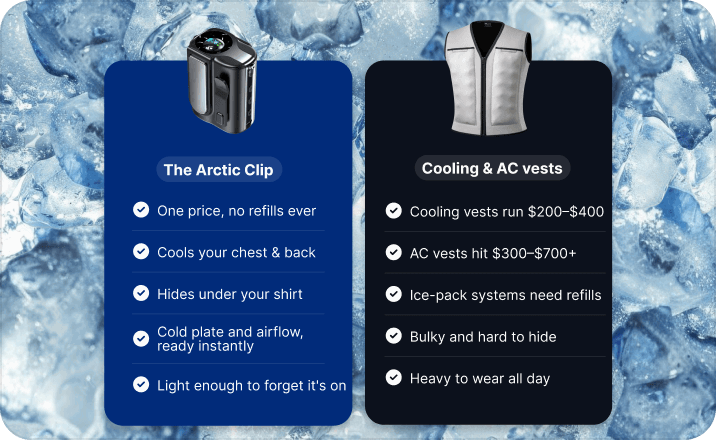
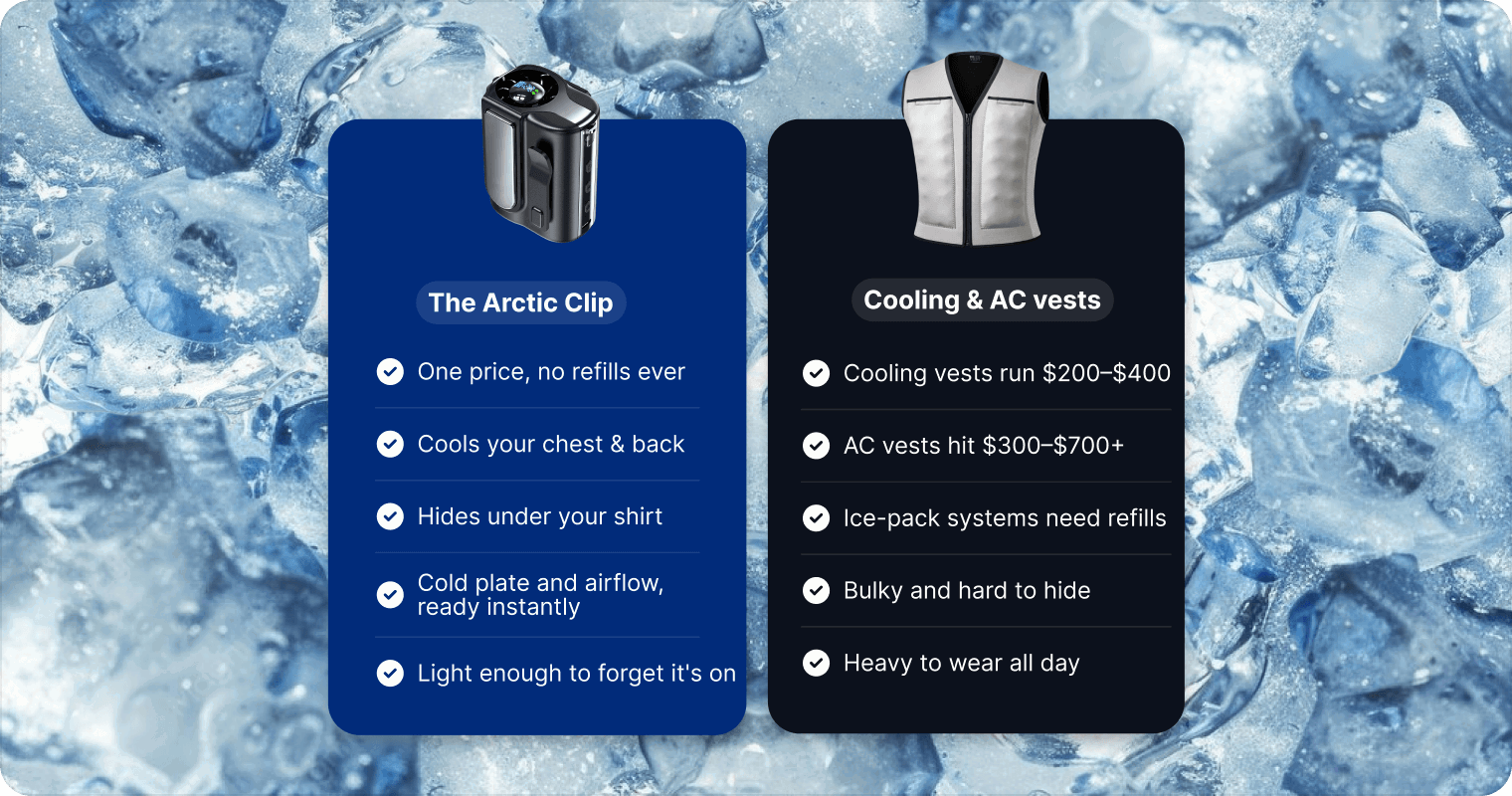
A phase-change cooling vest runs $200 to $400. Air-conditioned vests run $300 to $700+. Ice-pack systems need replacement packs. Over a season, the per-worker cost can climb to $500–$1,200 just to stay ahead of the new OSHA emphasis program.
The Arctic Clip is $39 per unit at the multi-pack price. One purchase. One charge per day.
Tom Whitaker, the Phoenix foreman quoted earlier, ran the numbers. "I outfitted my whole crew of 12 last June for less than what one cooling vest would've cost me. We didn't lose a single man to heat. Year before that, I lost three days of crew labor to heat exhaustion. The math is not complicated."
"I lost three days of crew labor to heat exhaustion the year before. The math is not complicated."
Bulk Pricing For Crews
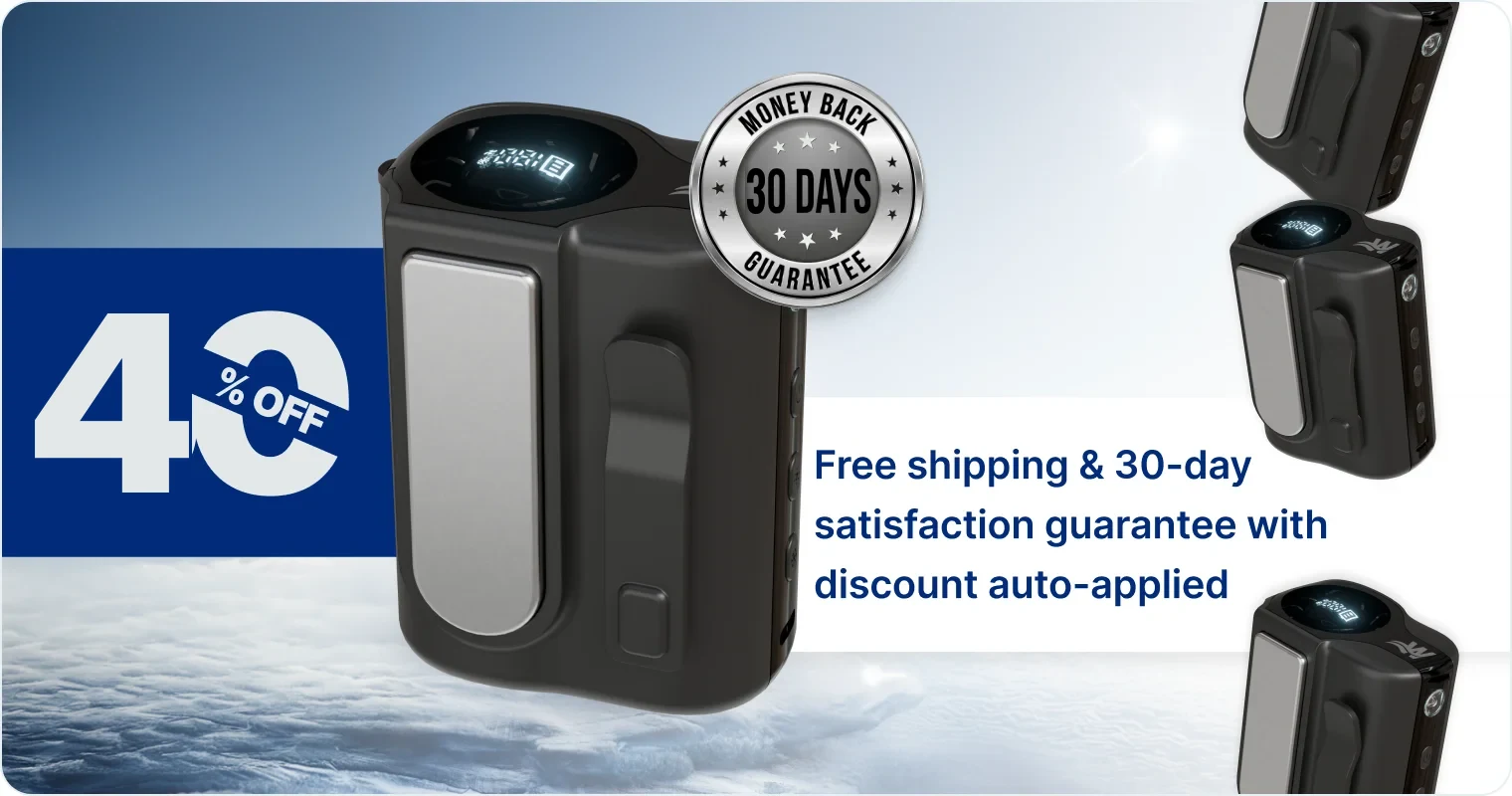
The manufacturer is currently offering a multi-unit discount for foremen, safety managers, and crew leads. A single unit is $39. Order 4 or more and the per-unit price drops further.
With heat still hitting most of the country, the company has reportedly already sold through two production runs. The next batch is small.


97% of users recommend Wünder Cool
to a friend or family member